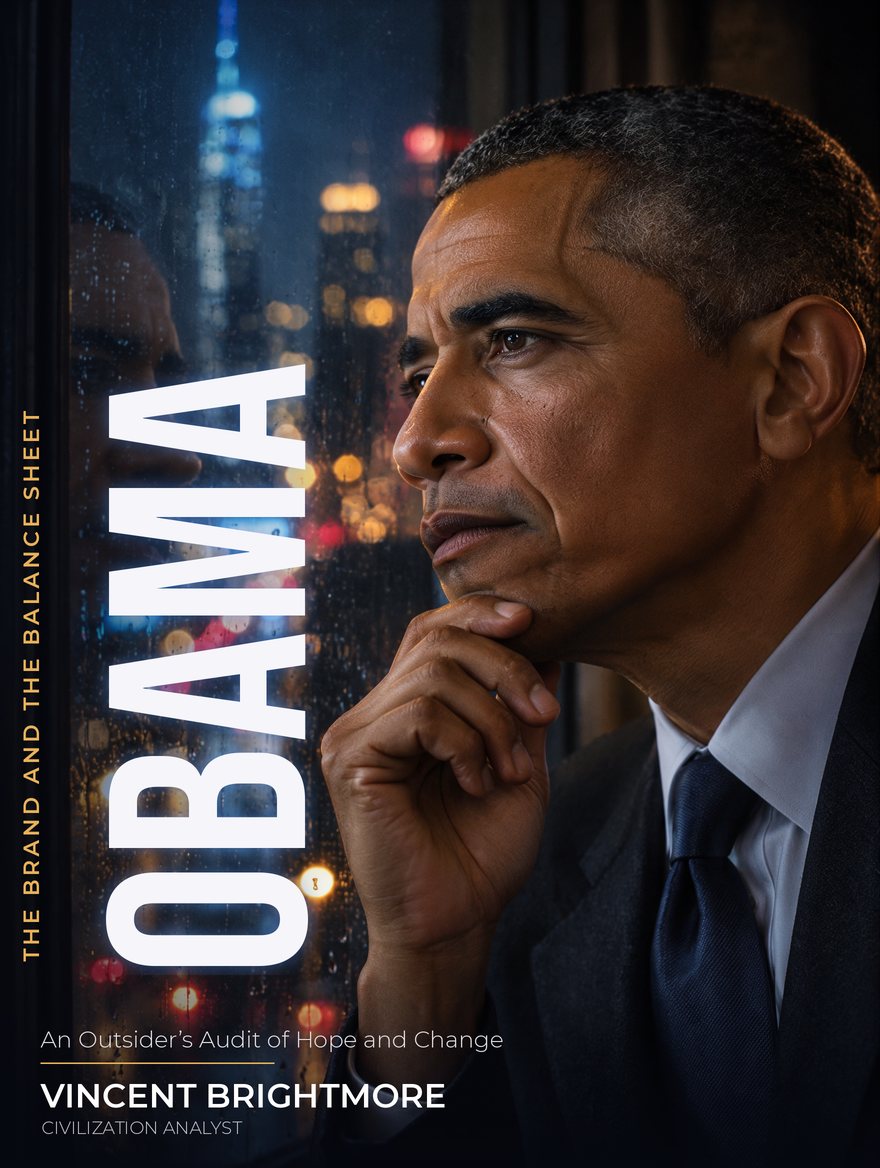
An outsider’s audit of Hope and Change
Obama
The Brand and the Balance Sheet
The best launch in American political history. Now read the balance sheet.
Imagine you are on the board of a company that has just been through the worst year in its modern history. Its bankers are failing. Its customers are losing their homes. Into the boardroom walks a new chief executive with almost no operating experience and the best launch campaign anyone has ever seen.
He has one word on the package, and the word is Hope.
A businessman judges a brand by what it delivered, not by what it promised. This book audits the brand against the record: credit where it was earned, debit where it wasn’t, and the same tests applied to every president.
Also in Swedish.
Brand versus balance sheet
Two documents tell every story
The brand is the promise. The balance sheet is what was delivered. The numbers below are the frame the book audits.
Inside the book
Four parts, seventeen chapters
Every chapter ends with the jab, the strongest case against it, the author’s own position — and a Brand Ledger.
- PART IThe BrandHow a product called Hope and Change was built
- 1The Making of a Brand
- 2Hope and Change: The Campaign as a Product
- 3The Nobel Prize in Advance
- PART IIThe Balance Sheet at HomeBanks, homes, jobs, health and borders
- 4The Bailout: Who Was Saved
- 5The Foreclosure Wave and Black Wealth
- 6The Recovery, the Stimulus and the Debt
- 7Obamacare
- 8Deporter in Chief
- 9The Auto Rescue and the Rust Belt
- PART IIIThe Balance Sheet AbroadDrones, red lines and deals
- 10The Drone President
- 11Libya, the Red Line and the Rise of ISIS
- 12Iran, Israel and the $38 Billion
- 13Reset, Crimea, Cuba and Paris
- PART IVThe AfterlifeWhat the office was worth, and what the brand left behind
- 14The Office as an Asset
- 15The Network: Power After Office
- 16The Brand in the Rearview
- 17Conclusion: The Audit of Hope
From the Introduction
The Product Called Hope
That was January 20, 2009. The man was Barack Obama. This book is the audit of what happened next.
Every business has two documents that tell its story. The first is the brand. It is the promise: what the product will do for you, how it will make you feel, what kind of person you become by choosing it. A strong brand is a real asset. It lowers the cost of selling, it buys patience from customers, and it carries a company through bad quarters.
The second document is the balance sheet. It does not care how you feel.
Judge the brand by what it delivered, not by what it promised.
The ledger
Every chapter ends with a Brand Ledger
Five lines, the same for every decision. The conclusion adds them up: where the brand delivered, where it didn’t, who paid, and whose balance sheet improved.
- The promise
- What the brand said.
- The delivery
- What the record shows.
- The price
- What it cost.
- Who paid
- Homeowners, taxpayers, voters, allies — or the future.
- Whose balance sheet got better
- The country’s, the banks’, the party’s or the man’s.
The jabs
One sharp sentence per chapter
Each one is followed by the strongest case against it. Real credit — the auto rescue, coverage for twenty million, bin Laden, the recovery — and real debit.
The country bought the label before anyone had read the record.
Chapter 1 · The Making of a BrandThe Nobel Committee paid in advance for a product called peace.
Chapter 3 · The Nobel Prize in AdvanceThe banks were rescued at a profit and the homeowners at a loss.
Chapter 4 · The BailoutThe brand lost, but the patients mostly won.
Chapter 7 · ObamacareHe bought the car companies a future and the factory towns a speech.
Chapter 9 · The Auto Rescue and the Rust BeltHe kept the prize, and his successors kept the list.
Chapter 10 · The Drone PresidentA strategy that can be cancelled by signature was never a strategy, only a mood.
Chapter 13 · Reset, Crimea, Cuba and ParisHope saved the system and passed one great law, but it built nothing that could outlive the man who sold it.
Conclusion · The Audit of Hope
Get the book
Straight from the author
Choose your language and format. No middleman.
About the author
Vincent Brightmore
Civilization analyst and pattern essayist. Entrepreneur for 50 years. Still building. From the outside, without a party to defend, he audits a presidency the way a board audits a chief executive: by the consequences.
The same tests he applies to Trump in The Business President — including what the office was worth after it ended.
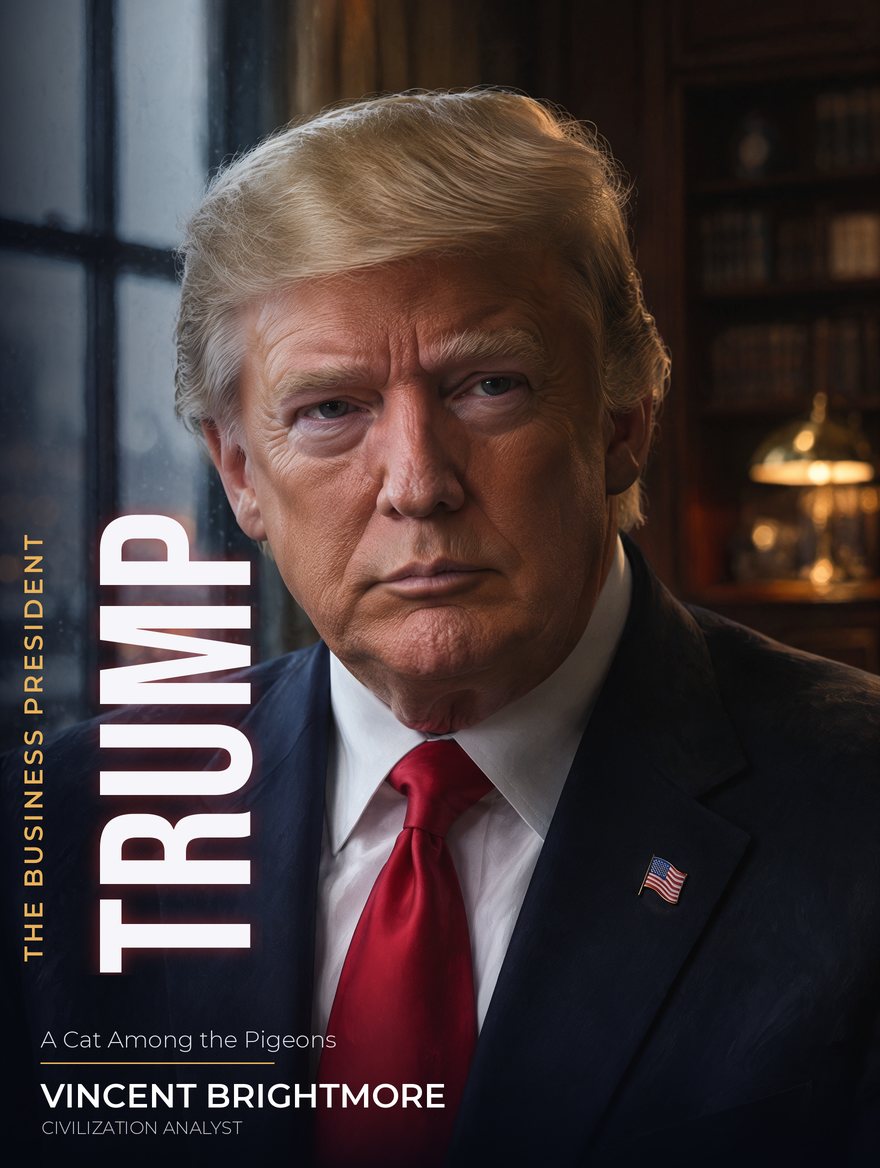 The companion volumeThe Business President — A Cat Among the Pigeons.
Judge by consequences, not intentions.
One step at a time.